


What Makes an Early Warning System Effective?
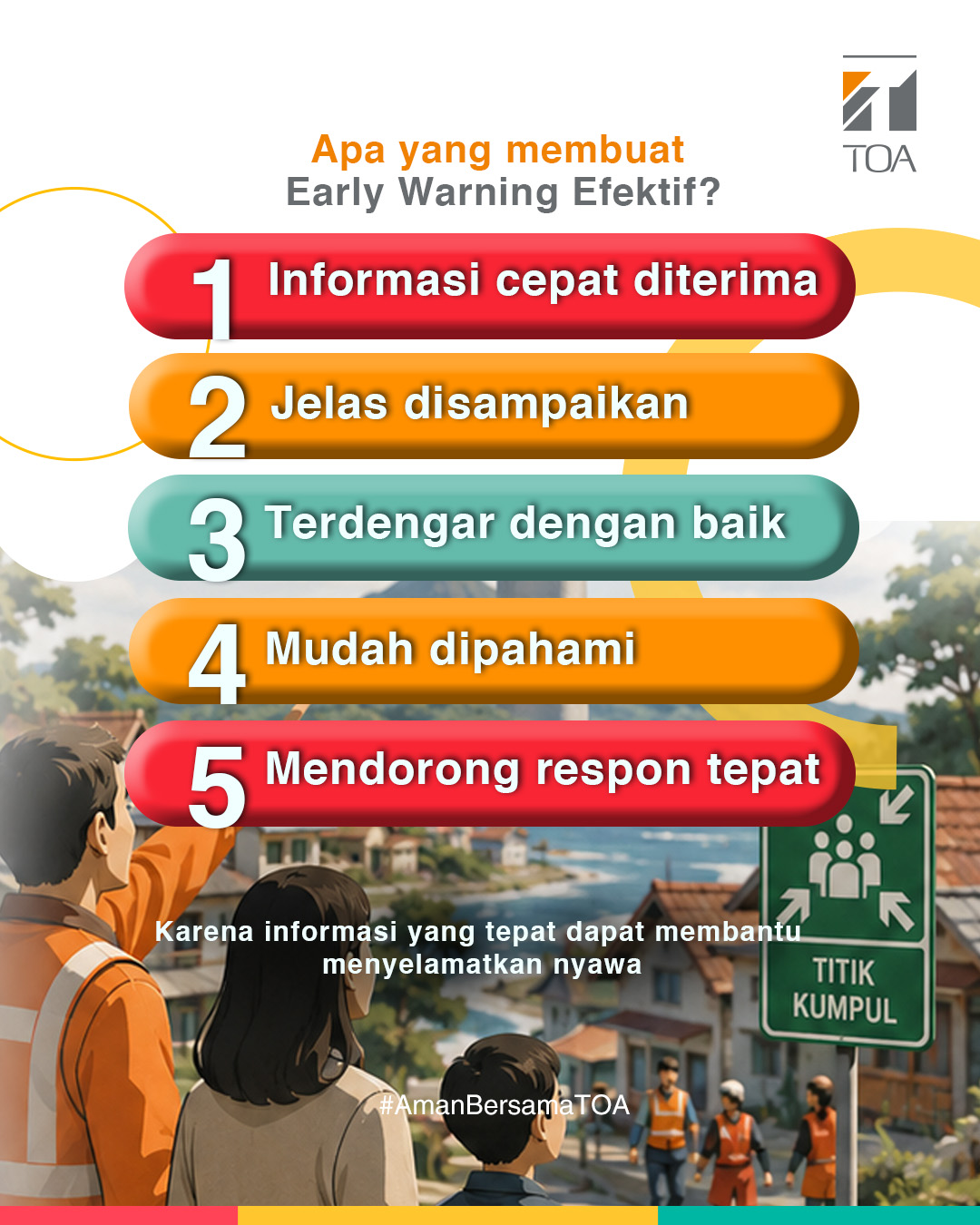
Speed is one of the key elements of an Early Warning System, but it is not the only factor that determines its effectiveness. A warning system delivers its greatest value when emergency information is not only transmitted quickly, but also received clearly, heard properly, understood correctly, and translated into the right actions by the community.
This is why disaster prevention goes beyond technology alone. Effective preparedness requires reliable communication systems and a well-informed public that understands how to respond before, during, and after an emergency. When these elements work together, evacuation procedures become more organized, emergency response improves, and disaster risks can be significantly reduced.
At TOA Indonesia, disaster preparedness means connecting technology with education. Through reliable Emergency Communication and Early Warning System solutions, along with various disaster education initiatives, TOA Indonesia continues to support safer environments by helping communities respond more effectively to emergency situations.
Ultimately, the purpose of an Early Warning System is not simply to issue alerts, but to enable people to take the right action at the right time. Because effective communication, combined with public understanding, is one of the most important foundations of disaster prevention and public safety.
In Indonesia, TOA products are marketed by the exclusive agent PT TOA Galva Prima Karya. Customers can purchase them through TOA Indonesia’s authorized dealers or online via e-commerce platforms.
For more information and the latest news about TOA products in Indonesia, follow TOA Indonesia on Facebook, Instagram (@toa.indonesia), Youtube (TOA Indonesia), and TikTok (@toaindonesia).
